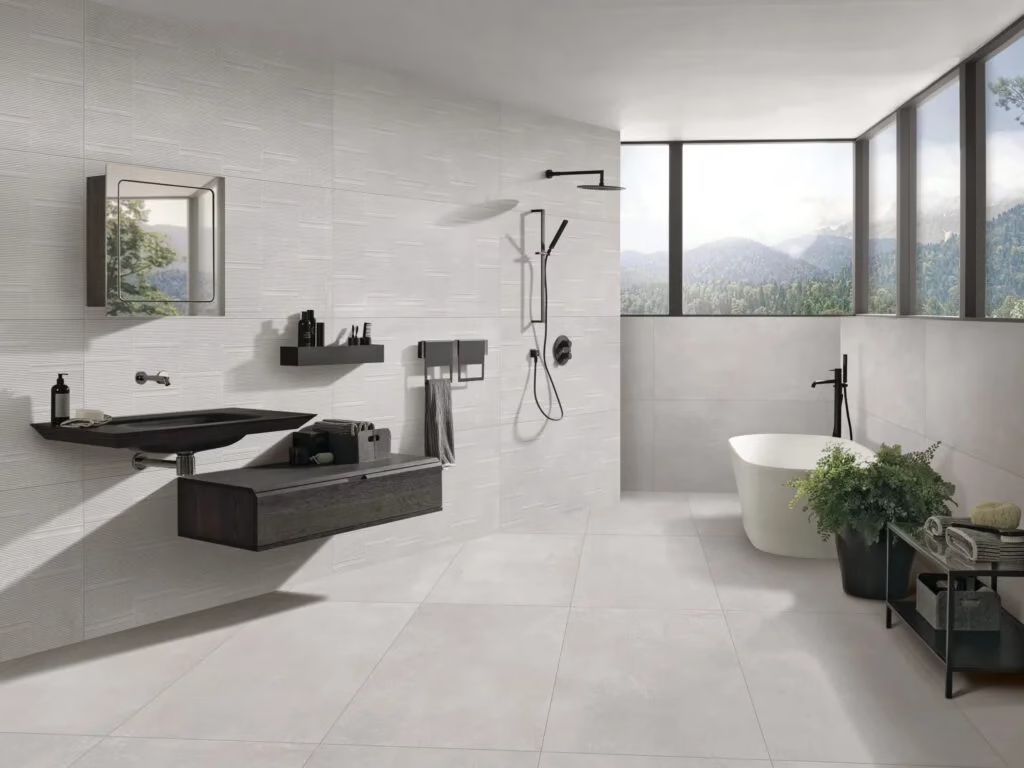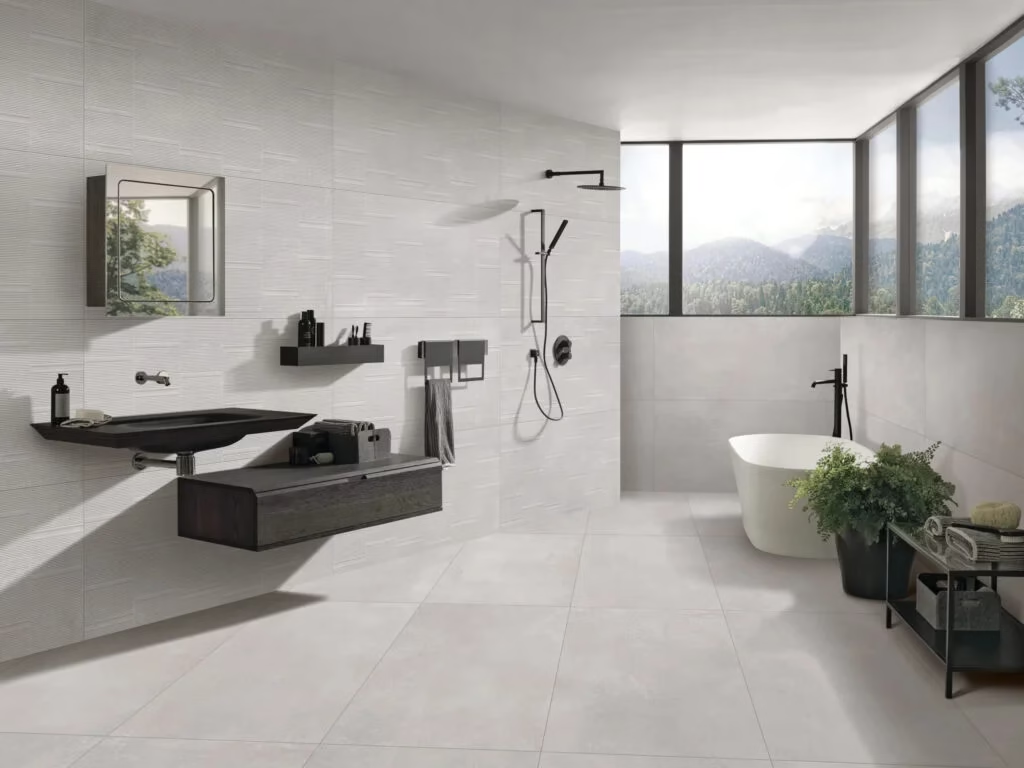
Choosing the best flooring for bathroom renovation is not about picking the prettiest tile. Bathrooms are the most moisture-aggressive room in any home. You are dealing with standing water, steam, temperature swings, and feet that go from wet to dry within seconds. Get the flooring wrong and you are looking at warped subfloors, cracked grout, mold behind baseboards, and a replacement job inside five years.
This guide covers seven bathroom flooring options with honest cost ranges, maintenance realities, and the installation pitfalls that most articles skip. Whether you are renovating a 40-square-foot powder room or a full primary suite, the material choice matters more than most homeowners realize.
What Makes Bathroom Flooring Different From Every Other Room
Subfloor moisture is the primary enemy. In a kitchen or living room, spills are occasional. In a bathroom, humidity is constant. Every hot shower sends moisture vapor through grout lines and into the subfloor below. Over time, even slow vapor transfer causes OSB or plywood subfloors to swell, which then causes tiles to crack or vinyl to bubble at seams.
Slip resistance is the second factor most buyers underweight. A floor that looks stunning dry can become dangerously slick when wet. The American National Standards Institute (ANSI) rates tile slip resistance using the Dynamic Coefficient of Friction (DCOF). For wet floor areas, ANSI A137.1 recommends a DCOF of 0.42 or higher. Most polished tiles, including some natural stone and glazed porcelain, fall well below that threshold.
Grout joints compound every moisture problem. They absorb water, harbor mold, and discolor within months in poorly ventilated bathrooms. The smaller the tile, the more grout coverage per square foot, which means more maintenance surface. This is not obvious when you are selecting samples in a showroom under LED lighting.
Best Flooring for Bathroom Compared
| Material | Water Resist. | Slip Resist. | Cost/sq ft | Lifespan | Maintenance | Radiant Heat? |
|---|---|---|---|---|---|---|
| Porcelain Tile | Excellent | Good* | $3 – $10 | 50+ yrs | Low | Yes |
| Ceramic Tile | Excellent | Good* | $1 – $5 | 20-30 yrs | Low | Yes |
| Luxury Vinyl Plank | Excellent | Very Good | $2 – $7 | 15-25 yrs | Very Low | Limited |
| Natural Stone | Poor (untreated) | Varies | $5 – $30+ | Lifetime | High | Yes |
| Engineered Wood | Moderate | Good | $4 – $12 | 20-30 yrs | Moderate | Limited |
| Sheet Vinyl | Very Good | Good | $1 – $4 | 10-20 yrs | Very Low | No |
| Concrete | Good (sealed) | Moderate | $6 – $15 | 30+ yrs | Moderate | Yes |
*Slip resistance on tile depends heavily on finish and texture. Matte and textured tiles perform significantly better than polished surfaces.
Bathroom Flooring Options: Material-by-Material Breakdown
1. Porcelain Tile
Porcelain is the industry benchmark for bathroom floors. It is fired at higher temperatures than ceramic, which makes it denser, less porous, and more resistant to water absorption. A good porcelain tile absorbs less than 0.5% of its weight in water, compared to up to 7% for standard ceramic. That difference matters enormously in a steam shower or around a leaking toilet.
Pros:
- Near-zero water absorption rate
- Lifespan of 50+ years with proper installation
- Compatible with in-floor radiant heating systems
- Huge range of sizes, finishes, and formats
- Hardest flooring surface available for high-traffic bathrooms
Cons:
- Cold underfoot without radiant heat
- Grout lines require sealing every 1-2 years
- Heavy: subfloor must support the load
- Difficult DIY installation; mistakes are costly
- Polished finishes become slippery when wet
Cost range: $3 to $10 per square foot for tile; installation adds $5 to $12 per square foot depending on pattern complexity and subfloor prep.
One overlooked reality: Large-format tiles (24×24 or larger) require a flatter subfloor. Lippage, where tile edges are not perfectly level, becomes visible and is a trip hazard. Your installer will charge more for subfloor grinding and leveling, but skipping it causes tile failure within two to three years.
Expert Insight: Rectified porcelain tiles have machine-cut edges that allow tighter grout joints (as narrow as 1/16″). Less grout means less maintenance surface and a cleaner visual. Worth the slight price premium in bathrooms.
2. Ceramic Tile
Ceramic is the budget-accessible tile option. It is softer than porcelain, easier to cut, and cheaper per square foot. For a half-bath or guest bathroom that sees light traffic, ceramic is a perfectly reasonable choice. In a primary bathroom with daily shower use, the higher porosity becomes a liability over time.
Cost range: $1 to $5 per square foot for tile. Installation costs are similar to porcelain unless the tile is smaller (mosaic formats take significantly longer to set).
Water resistance rating: Excellent on the glazed surface, but the tile body absorbs water if the glaze is chipped or if grout lines are not sealed. In wet shower floors, porcelain is the safer long-term choice.
Maintenance reality: Ceramic grout lines stain faster than porcelain because the grout is slightly more porous. Epoxy grout costs more upfront but eliminates this problem and is worth specifying in any tile bathroom.
3. Luxury Vinyl Plank (LVP)
LVP has taken over the renovation market for good reason. It is 100% waterproof at the plank level, comfortable underfoot, installs faster than tile, and costs significantly less. The catch is in the installation details. The planks are waterproof; the seams between them are not.
In a bathroom where water regularly reaches the floor, water can penetrate at the seams and reach the subfloor below. If the subfloor is not perfectly level, the planks flex and the seam integrity breaks down over time. Cheap LVP (under $2 per square foot) has thin wear layers (6 mil or less) that scratch and dent easily. Specify a minimum 12-mil wear layer for any wet room.
Cost range: $2 to $7 per square foot for material. Installation is $1.50 to $4 per square foot, making total installed cost of $3.50 to $11 per square foot significantly under tile.
Heated floor compatibility: Most LVP is rated for use over radiant heat, but only up to 85 degrees Fahrenheit. Check the manufacturer spec sheet. Some LVP warranties void if installed over electric radiant systems.
Resale consideration: LVP reads as a budget material to experienced buyers. In a primary bathroom renovation, tile still commands more perceived value at resale.
Expert Insight: If you choose LVP for a bathroom, use silicone caulk at all perimeter edges and transitions instead of quarter-round molding. Caulk creates a waterproof perimeter seal that molding alone cannot provide.
4. Natural Stone
Marble, travertine, slate, and limestone all fall under the natural stone category. Each behaves differently in a wet environment. Marble looks exceptional and ages beautifully, but it is calcium carbonate, which means acidic cleaners, soap scum, and even hard water etch the surface over time. Travertine has natural voids that trap moisture and bacteria unless filled and sealed. Slate is dense and naturally textured, making it one of the better slip-resistant stone options.
Cost range: $5 to $30+ per square foot for material, depending on species and origin. Imported marble from Italy or Turkey costs more than domestic options.
Sealing requirement: Most natural stone requires sealing every six to twelve months in a bathroom. Unsealed stone in a wet area will absorb moisture, develop efflorescence (white mineral deposits), and eventually crack from freeze-thaw cycles in colder climates.
Regional humidity note: In high-humidity climates like the Gulf Coast or Southeast U.S., natural stone requires more frequent sealing and better ventilation. Stone that performs well in a dry Arizona climate can degrade quickly in a Florida bathroom without aggressive maintenance.
5. Engineered Wood
Engineered wood in a bathroom is a risk calculation. The top layer is real hardwood veneer, so it looks warm and natural. The core is plywood or HDF, which handles moisture better than solid wood but will swell and delaminate if water sits on it or penetrates at seams. Bathrooms with good ventilation, low shower splash exposure (meaning a well-sealed shower enclosure), and disciplined cleaning habits are the only realistic settings for engineered wood.
Cost range: $4 to $12 per square foot for material. It costs more than LVP for similar visual results and carries more risk in a wet room.
Not recommended for master bathrooms with freestanding tubs or walk-in showers without solid glass enclosures. The risk of subfloor damage from long-term vapor exposure is too high to justify the cost.
Expert Insight: If a client specifically wants a wood look in a full bath, I steer them toward porcelain wood-look tile first, LVP with a 20-mil wear layer second, and engineered wood only when they accept the maintenance requirements in writing.
6. Sheet Vinyl
Sheet vinyl gets dismissed as dated, but it has a genuine functional advantage: there are no seams in the floor field. A single sheet of vinyl that runs wall to wall eliminates the seam problem that plagues LVP and engineered wood. For small bathrooms and rental properties, it remains a smart low-cost choice.
Cost range: $1 to $4 per square foot for material. Total installed cost is usually $3 to $7 per square foot, making it the most budget-accessible bathroom flooring option.
Failure point: Cheap sheet vinyl fails at the perimeter seam where the floor meets the wall. If this edge is not caulked and the baseboard is nailed through the vinyl, water wicks under the edge and reaches the subfloor. This is the single most common cause of subfloor rot in older rental properties.
Lifespan expectation: Ten to fifteen years in a typical bathroom. It does not add resale value but it protects the subfloor effectively when installed correctly.
7. Concrete
Polished or microtopping concrete is a high-design option that performs reasonably well in bathrooms when sealed properly. Unsealed concrete is extremely porous and will absorb everything from water to cleaning products. The sealing system matters more than the concrete itself.
Cost range: $6 to $15 per square foot for a poured and finished concrete floor. Concrete overlays (microtoppings applied over existing tile) run $4 to $10 per square foot and are a practical retrofit option.
Slip resistance note: Highly polished concrete has poor wet slip resistance. Specify an anti-slip additive in the topcoat sealer, or use a matte finish. Both options retain the aesthetic while improving safety.
Concrete cracks. Any crack in the slab or concrete overlay allows water ingress. For a bathroom on an upper floor, this is a serious concern since water will eventually reach the ceiling below.
Best Flooring for Small Bathrooms
Small bathrooms under 50 square feet have specific constraints that change the material calculus. Large-format tiles (12×24 or larger) actually make small spaces feel larger by reducing the number of grout lines. But large tiles in a small bathroom require meticulous subfloor leveling because lippage is more noticeable in confined spaces.
LVP installs quickly in small bathrooms and avoids the messy mortar process, which matters when renovation time is limited. The seamless look of sheet vinyl also works well in compact powder rooms where aesthetics are secondary to function.
For a small primary bathroom with a tub-shower combo, 12×12 matte ceramic tile with epoxy grout gives you durability, low maintenance, and a budget that leaves room to upgrade fixtures. That is usually a better value allocation than spending heavily on stone flooring in a small footprint.
Related: See [small bathroom storage ideas] for space optimization strategies that pair with flooring choices.
Best Waterproof Bathroom Flooring
True waterproof bathroom flooring means the material itself does not absorb water at the surface level. By that definition, porcelain tile, ceramic tile (glazed surface only), LVP, and sheet vinyl all qualify. Natural stone and engineered wood do not.
The installation system matters as much as the material. Porcelain tile over a Schluter Kerdi waterproofing membrane is a genuinely waterproof system from the surface through to the subfloor. LVP over bare plywood with no perimeter sealant is a waterproof surface sitting on a vulnerable substrate.
- For walk-in showers: Porcelain tile over a certified waterproofing membrane is the only professionally defensible choice.
- For bathroom floors outside the shower zone: LVP or glazed porcelain with properly sealed grout both perform well.
- For powder rooms: Any of the seven materials listed will work; durability and aesthetics can guide the choice.
- For bathrooms in humid climates (Southeast U.S., Gulf Coast, Hawaii): Avoid engineered wood entirely. Increase ventilation and grout sealing frequency for tile.
Bathroom Flooring Mistakes Homeowners Make
Choosing Polished Tile for Wet Floors
Polished porcelain and marble look stunning in showrooms. Wet, they are a slip hazard. The DCOF rating drops significantly when a smooth surface gets wet. A matte or textured finish with the same color and visual profile performs far better without sacrificing the aesthetic.
Skipping the Subfloor Inspection
Before any new flooring goes down, the subfloor needs to be assessed for rot, soft spots, and proper fastening. A tile installation over a bouncy or soft subfloor will crack at the grout lines within one to two years. Deflection is the enemy of tile. The subfloor must meet L/360 deflection standards, meaning it deflects no more than 1/360th of its span under load.
Using Unsanded Grout in Wide Joints
Unsanded grout is designed for joints narrower than 1/8 inch. Using it in wider joints causes shrinkage cracking and rapid staining. Match your grout type to your joint width. Using sanded grout with rectified tile that has 1/16-inch joints is equally problematic because the sand particles are too large to pack properly.
Underestimating Cheap Vinyl at the Seams
Budget sheet vinyl and low-end LVP both fail at seams and perimeter edges first. The seam adhesive on cheap LVP degrades with moisture exposure. The perimeter of sheet vinyl lifts when not properly caulked. These are the two failure points that cause subfloor damage, which costs ten times more to repair than a flooring upgrade would have cost upfront.
Ignoring Humidity’s Effect on Grout and Subfloors
In poorly ventilated bathrooms, relative humidity regularly exceeds 80% after showers. At that level, even sealed grout becomes a mold growth surface because condensation forms in the cooler grout channels. The solution is an exhaust fan rated for the room volume (CFM = length x width x height / 7.5) and running it for 20 minutes after every shower. Flooring material selection cannot compensate for absent ventilation.
How to Choose the Best Floor for a Bathroom Based on Your Budget
Under $500 Total (Small Bathroom, DIY)
Sheet vinyl or budget ceramic tile. Sheet vinyl installed DIY costs $1 to $3 per square foot all-in for a 50-square-foot bathroom. Ceramic tile with DIY installation runs $2 to $4 per square foot. Either choice protects the subfloor adequately. Spend the saved money on proper ventilation.
$500 to $1,500 (Mid-Range, Professional Install)
LVP with professional installation, or ceramic tile with professional installation including subfloor leveling. This budget covers a standard 50 to 80-square-foot bathroom with proper prep work. Do not skip subfloor preparation to stay in budget; it causes premature failure.
$1,500 to $4,000 (Full Renovation Quality)
Porcelain tile with professional installation, including waterproofing membrane if the bathroom has a walk-in shower, epoxy grout, and a heated floor mat system. This is the sweet spot for primary bathrooms where longevity and resale value matter. A heated floor mat for a 60-square-foot bathroom adds $400 to $800 to the budget and significantly improves daily usability.
Over $4,000 (Premium)
Natural stone or high-end large-format porcelain with premium installation. At this budget, the material cost is almost secondary to the installation quality. Find an installer with verified natural stone or large-format tile experience. Ask for photos of previous work with the specific material you are selecting.
Related: See [walk in shower ideas] for design options that complement your flooring selection.
When Heated Bathroom Floors Are Worth the Investment
Electric radiant heating mats cost $8 to $15 per square foot installed for a bathroom floor. That adds $500 to $1,200 to a standard primary bathroom project. The energy cost to run them is low, typically $0.15 to $0.30 per hour for a 60-square-foot bathroom, and most systems connect to smart thermostats that pre-warm the floor before your alarm goes off.
Heated floors are worth the investment when you have tile (which is inherently cold underfoot), you live in a climate with cold winters, and the bathroom is used daily. They are not worth the investment in sheet vinyl or LVP, where the reduced thermal conductivity limits the effect, or in bathrooms that see infrequent use.
Hydronic systems (water-based) cost three to four times more than electric mats and require a boiler connection. For a single bathroom, electric mats are the practical choice. Hydronic makes sense only in whole-house radiant heating projects.
Frequently Asked Questions
What is the best flooring for a bathroom with high humidity?
Porcelain tile is the best choice for high-humidity bathrooms. Its water absorption rate of under 0.5% makes it the most moisture-resistant hard flooring option. Pair it with epoxy grout and a bathroom exhaust fan rated for at least 50 CFM to control ambient humidity. In climates with consistently high outdoor humidity (Southeast U.S., Hawaii), natural stone and engineered wood should be avoided entirely.
Is luxury vinyl plank flooring good for bathrooms?
LVP is waterproof at the plank level and performs well in bathrooms when installed correctly. The critical details are: use a minimum 12-mil wear layer, apply silicone caulk at all perimeter edges, and ensure the subfloor is flat within 3/16 inch over 10 feet. LVP is not ideal in wet shower zones or bathrooms where water regularly pools on the floor.
How often does bathroom tile grout need to be sealed?
Cement-based sanded or unsanded grout needs sealing every one to two years in a bathroom with regular shower use. Epoxy grout is non-porous and does not require sealing, which is why it is worth the additional upfront cost. To test if existing grout needs resealing, place a few drops of water on the grout line. If the water absorbs within 30 seconds, reseal immediately.
Can you put heated flooring under vinyl plank?
Most LVP is rated for use over radiant heating up to 85 degrees Fahrenheit. Check the specific manufacturer’s warranty before installing. Electric mat systems are the only practical radiant option under LVP; hydronic systems run too hot. Some LVP warranties void if installed over radiant heat, so read the product specifications before committing.
What bathroom flooring is easiest to maintain?
LVP and sheet vinyl require the least maintenance. Both clean with a damp mop and standard household cleaners, do not require sealing, and resist staining. Among tile options, large-format porcelain with epoxy grout minimizes maintenance by reducing grout coverage. Natural stone is the highest-maintenance option by a significant margin.