
Best Flooring for Bathroom: 7 Materials Compared With Real Renovation Tradeoffs
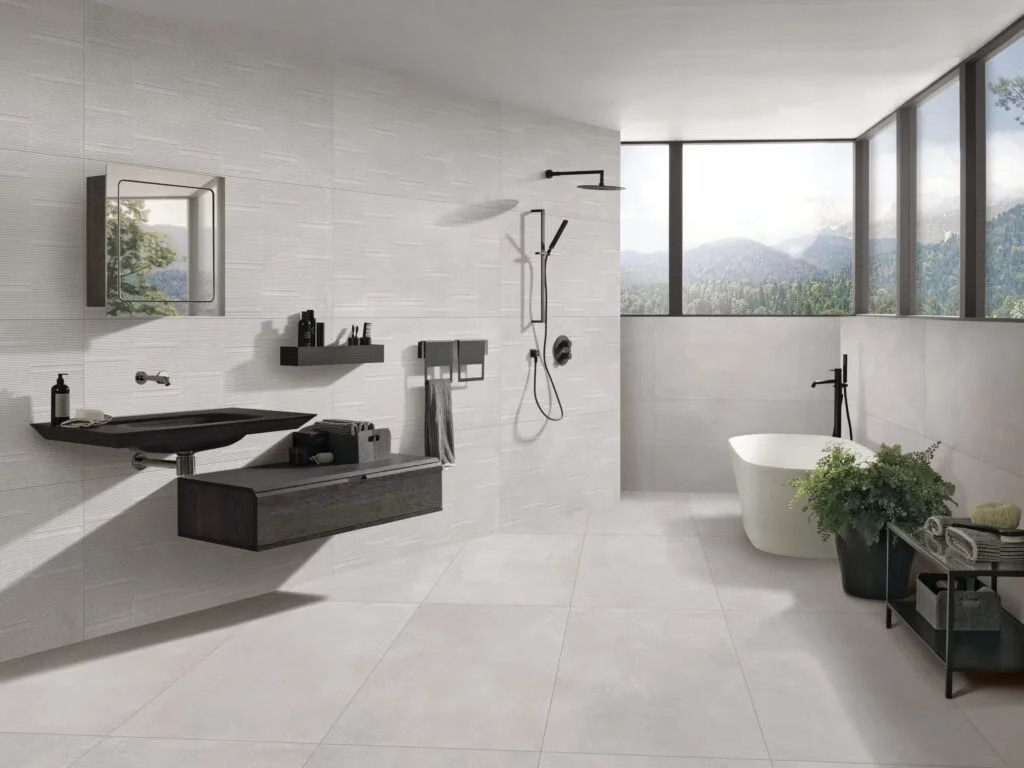
Choosing the best flooring for bathroom renovation is not about picking the prettiest tile. Bathrooms are the most moisture-aggressive room in any home. You are dealing with standing water, steam, temperature swings, and feet that go from wet to dry within seconds. Get the flooring wrong and you are looking at warped subfloors, cracked grout, mold behind baseboards, and a replacement job inside five years. This guide covers seven bathroom flooring options with honest cost ranges, maintenance realities, and the installation pitfalls that most articles skip. Whether you are renovating a 40-square-foot powder room or a full primary suite, the material choice matters more than most homeowners realize. What Makes Bathroom Flooring Different From Every Other Room Subfloor moisture is the primary enemy. In a kitchen or living room, spills are occasional. In a bathroom, humidity is constant. Every hot shower sends moisture vapor through grout lines and into the subfloor below. Over time, even slow vapor transfer causes OSB or plywood subfloors to swell, which then causes tiles to crack or vinyl to bubble at seams. Slip resistance is the second factor most buyers underweight. A floor that looks stunning dry can become dangerously slick when wet. The American National Standards Institute (ANSI) rates tile slip resistance using the Dynamic Coefficient of Friction (DCOF). For wet floor areas, ANSI A137.1 recommends a DCOF of 0.42 or higher. Most polished tiles, including some natural stone and glazed porcelain, fall well below that threshold. Grout joints compound every moisture problem. They absorb water, harbor mold, and discolor within months in poorly ventilated bathrooms. The smaller the tile, the more grout coverage per square foot, which means more maintenance surface. This is not obvious when you are selecting samples in a showroom under LED lighting. Best Flooring for Bathroom Compared Material Water Resist. Slip Resist. Cost/sq ft Lifespan Maintenance Radiant Heat? Porcelain Tile Excellent Good* $3 – $10 50+ yrs Low Yes Ceramic Tile Excellent Good* $1 – $5 20-30 yrs Low Yes Luxury Vinyl Plank Excellent Very Good $2 – $7 15-25 yrs Very Low Limited Natural Stone Poor (untreated) Varies $5 – $30+ Lifetime High Yes Engineered Wood Moderate Good $4 – $12 20-30 yrs Moderate Limited Sheet Vinyl Very Good Good $1 – $4 10-20 yrs Very Low No Concrete Good (sealed) Moderate $6 – $15 30+ yrs Moderate Yes *Slip resistance on tile depends heavily on finish and texture. Matte and textured tiles perform significantly better than polished surfaces. Bathroom Flooring Options: Material-by-Material Breakdown 1. Porcelain Tile Porcelain is the industry benchmark for bathroom floors. It is fired at higher temperatures than ceramic, which makes it denser, less porous, and more resistant to water absorption. A good porcelain tile absorbs less than 0.5% of its weight in water, compared to up to 7% for standard ceramic. That difference matters enormously in a steam shower or around a leaking toilet. Pros: Cons: Cost range: $3 to $10 per square foot for tile; installation adds $5 to $12 per square foot depending on pattern complexity and subfloor prep. One overlooked reality: Large-format tiles (24×24 or larger) require a flatter subfloor. Lippage, where tile edges are not perfectly level, becomes visible and is a trip hazard. Your installer will charge more for subfloor grinding and leveling, but skipping it causes tile failure within two to three years. Expert Insight: Rectified porcelain tiles have machine-cut edges that allow tighter grout joints (as narrow as 1/16″). Less grout means less maintenance surface and a cleaner visual. Worth the slight price premium in bathrooms. 2. Ceramic Tile Ceramic is the budget-accessible tile option. It is softer than porcelain, easier to cut, and cheaper per square foot. For a half-bath or guest bathroom that sees light traffic, ceramic is a perfectly reasonable choice. In a primary bathroom with daily shower use, the higher porosity becomes a liability over time. Cost range: $1 to $5 per square foot for tile. Installation costs are similar to porcelain unless the tile is smaller (mosaic formats take significantly longer to set). Water resistance rating: Excellent on the glazed surface, but the tile body absorbs water if the glaze is chipped or if grout lines are not sealed. In wet shower floors, porcelain is the safer long-term choice. Maintenance reality: Ceramic grout lines stain faster than porcelain because the grout is slightly more porous. Epoxy grout costs more upfront but eliminates this problem and is worth specifying in any tile bathroom. 3. Luxury Vinyl Plank (LVP) LVP has taken over the renovation market for good reason. It is 100% waterproof at the plank level, comfortable underfoot, installs faster than tile, and costs significantly less. The catch is in the installation details. The planks are waterproof; the seams between them are not. In a bathroom where water regularly reaches the floor, water can penetrate at the seams and reach the subfloor below. If the subfloor is not perfectly level, the planks flex and the seam integrity breaks down over time. Cheap LVP (under $2 per square foot) has thin wear layers (6 mil or less) that scratch and dent easily. Specify a minimum 12-mil wear layer for any wet room. Cost range: $2 to $7 per square foot for material. Installation is $1.50 to $4 per square foot, making total installed cost of $3.50 to $11 per square foot significantly under tile. Heated floor compatibility: Most LVP is rated for use over radiant heat, but only up to 85 degrees Fahrenheit. Check the manufacturer spec sheet. Some LVP warranties void if installed over electric radiant systems. Resale consideration: LVP reads as a budget material to experienced buyers. In a primary bathroom renovation, tile still commands more perceived value at resale. Expert Insight: If you choose LVP for a bathroom, use silicone caulk at all perimeter edges and transitions instead of quarter-round molding. Caulk creates a waterproof perimeter seal that molding alone cannot provide. 4. Natural Stone Marble, travertine, slate, and limestone all fall under the natural stone category. Each behaves